Weekly Questions

Copyright exists in all the material on this website and is owned by Messianic Education Australia Ltd. unless otherwise explicitly stated. This copyright extends to the images, logos, layout and presentation styles as well as the text material.
Pictures from Israel
 Click to Enlarge
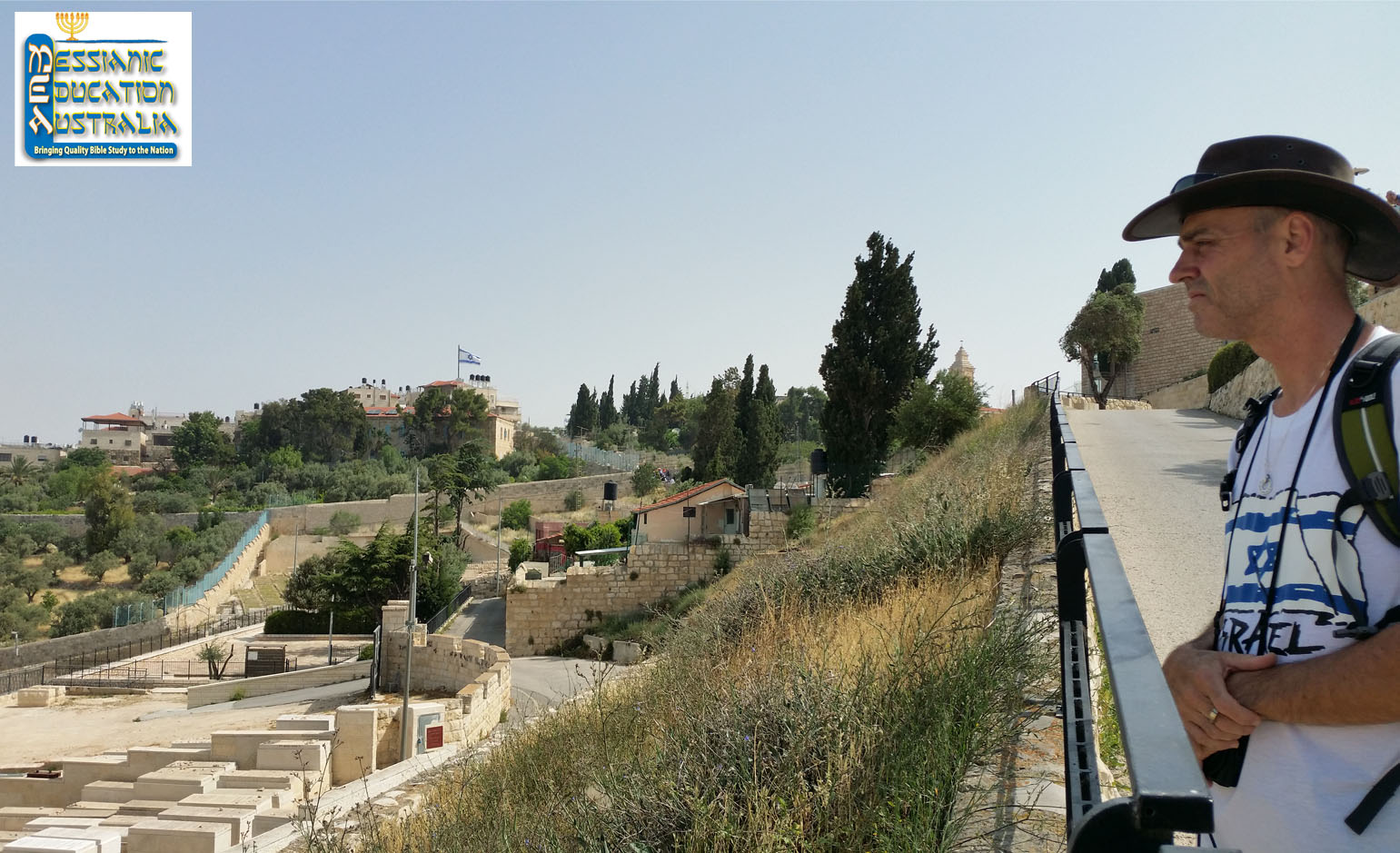
Australian visitor to Israel, Avir is pictured looking over to Jerusalem. You can see the graves in the foreground. The Mt. of Olives has always been an important feature in Jerusalem’s landscape
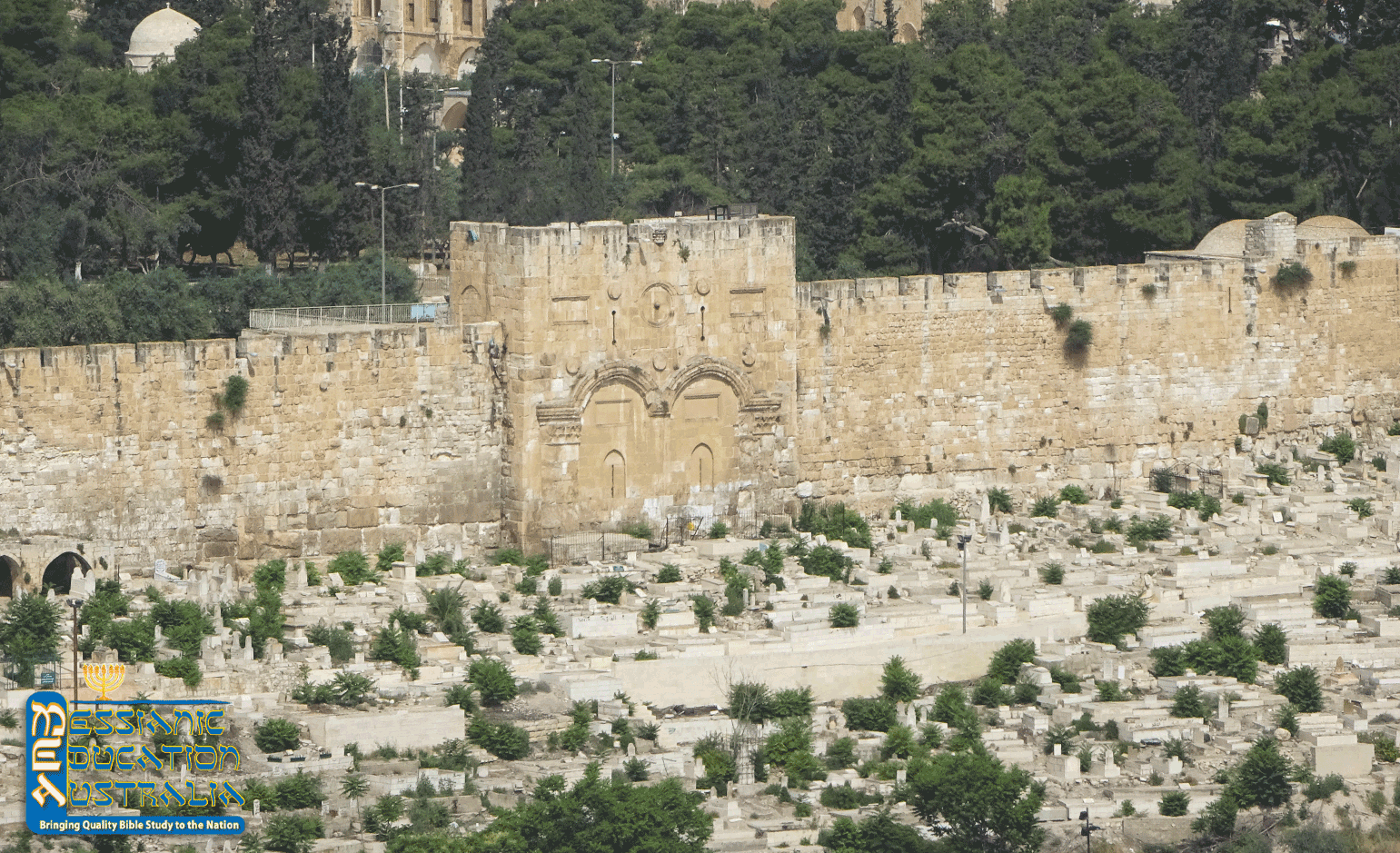
Within Judaism and Christianity, the Mt of Olives plays an important role in the return of the Messiah, King of Kings.
From the 3rd millennium B.C. until the present, this 885 metre hill has served as one of the main burial grounds for the city. The 3200 metre long ridge has three summits each of which has a tower built on it. At the bottom of the slope is the Garden of Gethsemane.
Zechariah 14:4
On that day Messiah’s feet will stand
on the Mount of Olives,
which lies to the east of Yerushalayim; (Jerusalem)
Weekly Questions

Copyright exists in all the material on this website and is owned by Messianic Education Australia Ltd. unless otherwise explicitly stated. This copyright extends to the images, logos, layout and presentation styles as well as the text material.
Pictures from Israel

Click to enlarge
History of Israel – Gan HaShlosha National Park
Israel is home to many breathtaking natural wonders and a lot of stunning scenery, and the Gan HaShlosha Park, located in the Lower Galilee region is one of them. Gan HaShlosha National Park is full of surprises for any visitors who venture to this part of Israel. Located between kibbutzim Beit Alfa and Nir David, these natural spring waters maintain a constant temperature of 28 degrees Celsius, making it ideal for swimming all year round. The Park’s name in Hebrew literally means ‘Park of the three’, and is also known in Arabic as ‘Sakhne’ meaning ‘The hot’ pool, and is so named in memory of three Jewish pioneers who, in 1938, were killed when their car rode over a land mine while they were surveying the area for the Jewish National Fund.
There are many historical attractions within the Park, including an old water-powered mill operating at the site and a reconstruction of Tel Amal (first built December 10, 1936); one of the first ‘Tower and Stockade’ settlements set up by Jewish pioneers during the 1936-39 Arab Revolt, as a protest against a British ban on the establishment of new Zionist settlements. Tel Amal was one of 52 communities all built on the same night.
The Prophet Ezekiel in the Bible writes this very apt prediction of Israel’s return to its homeland: “The desolate land will be cultivated instead of being a desolation in the sight of everyone who passes by. They will say, “This desolate land has become like the garden of Eden; and the waste, desolate and ruined cities are fortified and inhabited.” (Ezekiel 36:34-35)
The Park is Also home to the Museum of Regional and Mediterranean Archaeology which displays ancient and rare Greek agricultural tools; Egyptian and Persian artefacts excavated from the nearby Beit She’an Valley; an exhibit showing the ancient Italian civilization known as the Etruscans.
Australian visitors will be right at home in the park’s small zoo hosting koalas and kangaroos amongst other Australian wildlife. The park has two other unique events: the Israeli Juggling Convention, the second largest juggling convention in the world, drawing in over 2,000 jugglers each year; and also the location for Israel’s biggest yoga festival.
Copyright exists in all the material on this website and is owned by Messianic Education Australia Ltd. unless otherwise explicitly stated. This copyright extends to the images, logos, layout and presentation styles as well as the text material.
Weekly Questions
Copyright exists in all the material on this website and is owned by Messianic Education Australia Ltd. unless otherwise explicitly stated. This copyright extends to the images, logos, layout and presentation styles as well as the text material.