
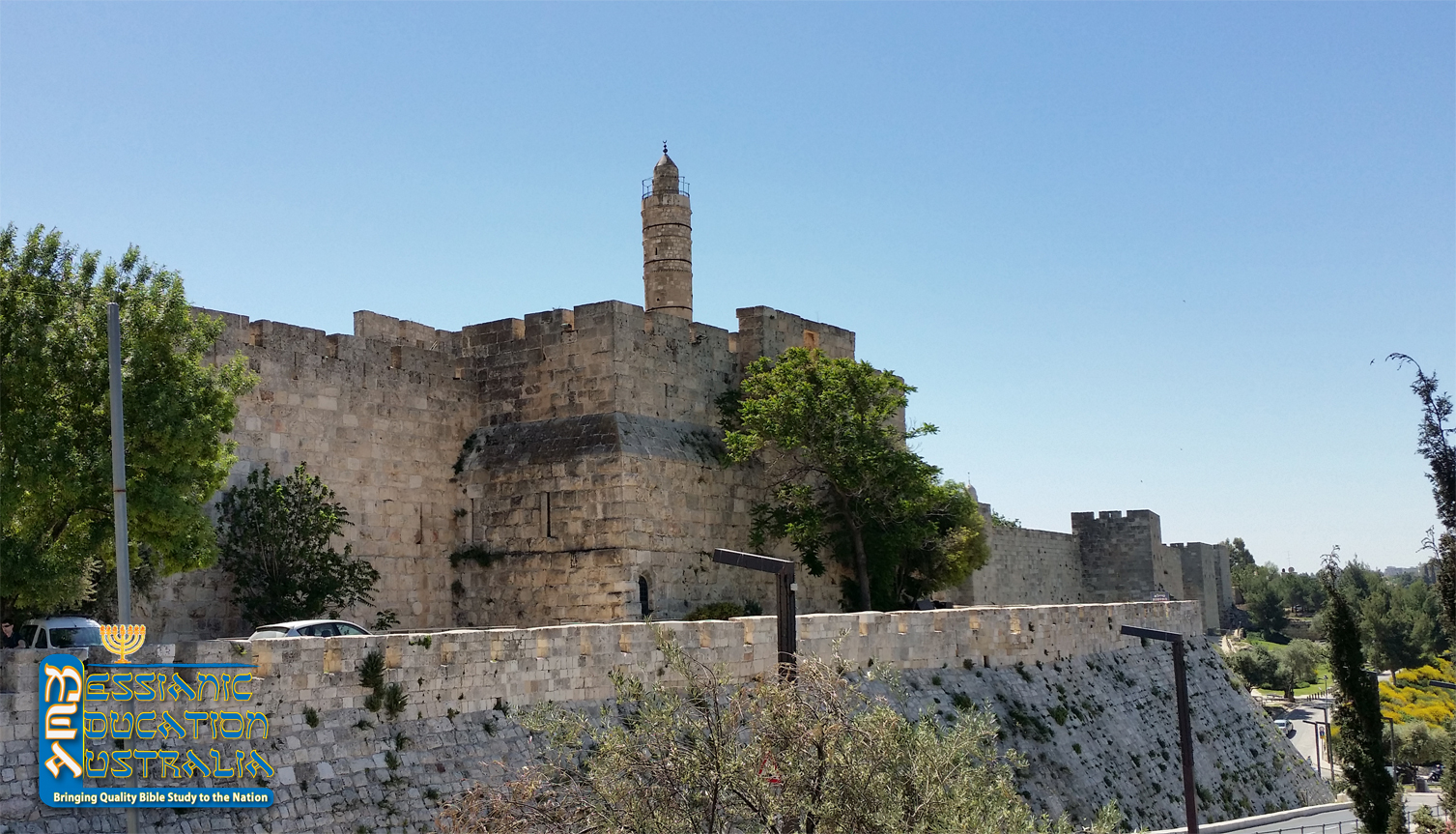
Israel © MEA 20180103 (N220) Historical Sites in Israel -Mount of Olives
Historical Sites in Israel -Mount of Olives
The Mount of Olives above is one of three hills on a long ridge to the east of Jerusalem. Rising to more than 800 metres, it offers an unrivalled vista of the Old City and the Temple Mount. The Mount of Olives is historically famous as it was once covered with olive trees, notwithstanding that there are some still alive and well today that are purported to be 2000 years old. Many an olive tree on this hill have born witness to well-known events recorded in the Bible.
King David fled over the Mount of Olives to escape when his son Absalom rebelled. After King Solomon turned away from God, he built pagan temples there for the gods of his foreign wives (2 Samuel 15:30 and 1 Kings 11:7-8). Ezekiel had a vision of “the glory of the Lord” ascending from the city and stopping on the Mount of Olives (Ezekiel 11:23). Zechariah prophesied that in the final victory of the forces of good over evil, that the Lord of Hosts would “stand on the Mount of Olives” and the mount would be “split in two from East to West”, (Zech 14:3-4).
Yeshua went often to the Mount of Olives, a 40-minute walk from the Temple to Bethany; there He rested and prayed. He went down from this Mount on His triumphal entry to Jerusalem on what is affectionately known as Palm Sunday. Here he wept over the city’s imminent destruction, (Luke 19:29-44). In a major address to His disciples on the mount, he foretold his second coming. (Matthew 24:27-31). He prayed there on that fateful night before he was arrested and subsequently killed, (Matthew 26:30-56). And, He ascended into heaven from the Mount of Olives (Acts 1:1-12).
Until the destruction of the Temple, the Mount of Olives was a place where many Jews, during times of pilgrimage, would sleep out under the olive trees. Also, during the Siege of Jerusalem which led to the destruction of the City in AD 70, Roman soldiers from the 10th Legion camped on the mount.
In Jewish tradition, the Messiah will descend the Mount of Olives on Judgement Day and enter Jerusalem through the Golden Gate (the blocked-up double gate in the centre of the eastern wall of the Temple Mount), also known as the Gate of Mercy, or the Beautiful Gate. For this reason, Jews have always sought to be buried on the slopes of the mount. The area serves as one of Jerusalem’s main cemeteries, with an estimated 150,000 graves.
Among them are complex catacombs called the Tombs of the Prophets. It is said these catacombs contain the graves of the prophets Haggai, Zechariah and Malachi who lived in the 6th and 5th centuries BC. From Byzantine times the mount became a place of church-building, and by the 6th century it had 24 churches surrounded by monasteries inhabited by large numbers of monks and nuns.
Copyright exists in all the material on this website and is owned by Messianic Education Australia Ltd. unless otherwise explicitly stated. This copyright extends to the images, logos, layout and presentation styles as well as the text material.