
+Israel © MEA-20180124 (PF319) Historical Israel -Herod’s Temple
Historical Israel -Herod’s Temple
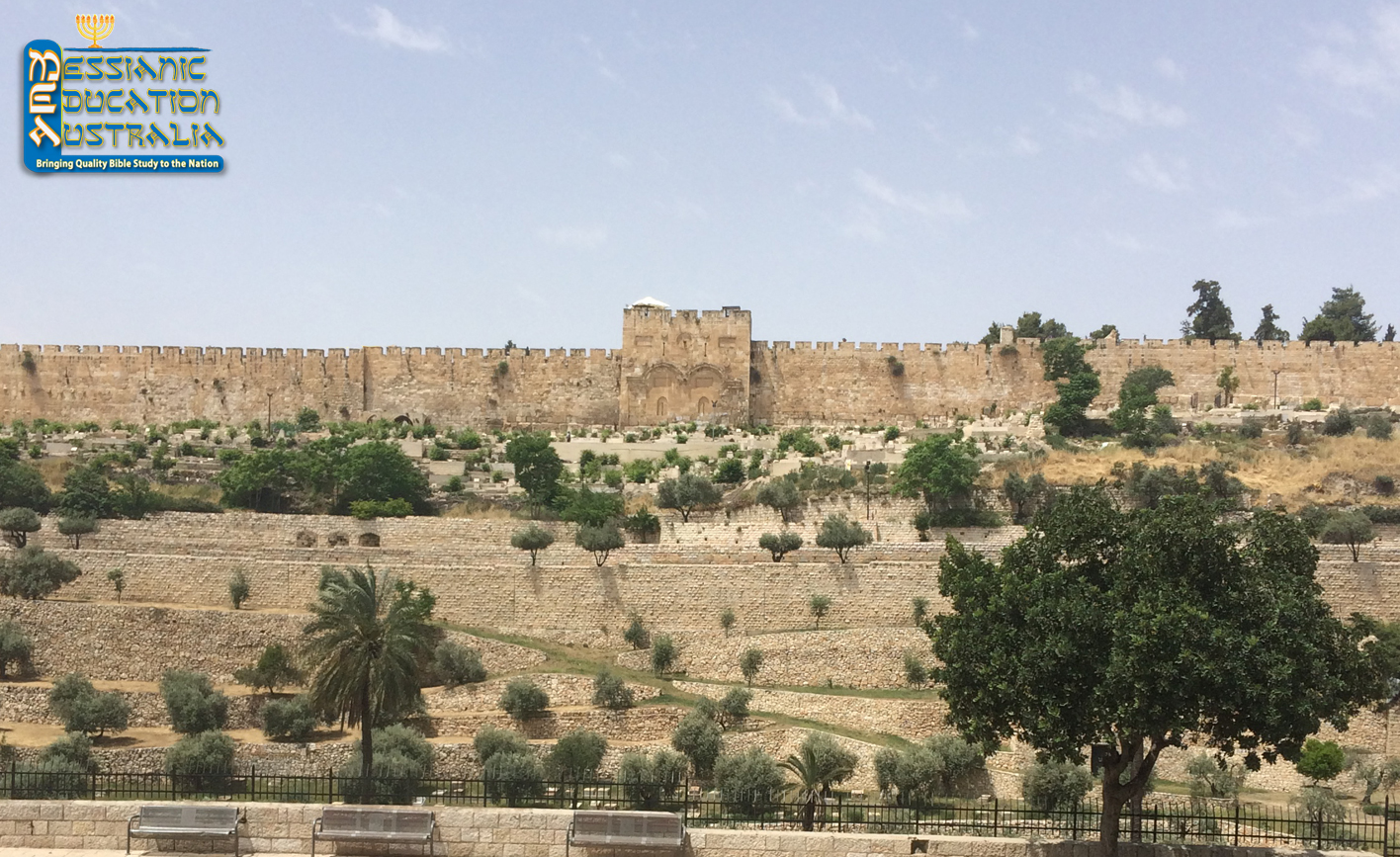
On the eastern edge of Jerusalem, just west of Gethsemane and northwest of the Kidron Valley, sat the Temple of Herod. Literature states that the outer walls formed a rough rectangle, 500 feet long by 100 feet wide, slightly narrower on the south than the north, and slightly tilted to the northwest. Archaeological evidence has the dimensions closer to 1,550 feet by 1000 feet. On the far northwest corner sat Antonia Fortress, the home of the temple garrison that stayed alert for disturbances in the temple—disturbances that could gain the governor unwanted attention from Rome.
This 50:1 scale model, covering nearly one acre, shows ancient Jerusalem and the Temple at its peak, meticulously recreating its topography and architectural character in 66 CE, the year in which the Great Revolt against the Romans broke out, leading to the destruction of the Temple and the city in the year 70 CE. The model, a Jerusalem cultural landmark, was originally built at the initiative of Holyland Hotel owner Hans Kroch in memory of his son Jacob, who fell in Israel’s War of Independence in 1948. The model includes a replica of the Herodian Temple. [To get an aerial view of this picture, cover over the man at the top of the picture with your thumb and look at the picture again.]
The model was opened to the public in 1966, immediately becoming a popular attraction and educational site for Israelis and tourists alike. In 2006 the model was transferred to the Israel Museum campus, where it offers a concrete illustration of the period documented in the Dead Sea Scrolls, when Rabbinic Judaism took shape and Christianity was born. Providing a vivid context for the Shrine of the Book and the Dead Sea Scrolls and for many contemporaneous archaeological artefacts displayed throughout the Museum, the Model Illustrates one of the most formative periods in the history of the Jewish people, and bears a deep connection to the symbols of modern statehood that surround the Museum campus. In preparation for the move, the model was sawn into 1,000 pieces and later reassembled. The Holyland Hotel spent $3.5 million on the move.
Copyright exists in all the material on this website and is owned by Messianic Education Australia Ltd. unless otherwise explicitly stated. This copyright extends to the images, logos, layout and presentation styles as well as the text material.